Khatchkars - "Stone Cross"

Khatchkars - "Stone Cross"
Khatchars are everywhere in Armenia; in and around churches, on streets and roads, and out in the countryside. There are tens of thousands all over. Some characteristics of khatchars are that they are seldom symmetrical left to right or top to bottom. This symbolizes the assymetry of the world. The carved background patterns (similar to celtic knots) on many khatchkars have no beggining or end - symbolizing the eterenity of the universe. And, finally, a common practice was to break a small piece of the carving with a chisel. This symbolizes the idea that nothing on earth is perfect. Khatchkars date from at least the middle ages if not earlier. .

Saturday, July 21, 2012

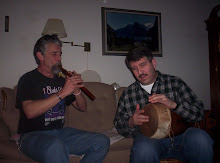
Our Armenian Fundraising dinner was a great success last Saturday. We had about 30 people in attendance.  Marty and I performed a house concert  - we are called Twisted Roots - along with our friends Marilyn Kaler on harmonica and Paul Chasman on guitars.

Scandia Hall - Sons of Norway  - about to be invaded by
Armenians

We ate well, raised money for my house building project in Armenia, got to share some of the culture and we all went away with lots of leftovers.  We are still eating kuftas, khorovats, dolmas, imam beyeldi and simit here at hom

Leslie making Armenian prayer flags.

Thanks to all our great friends who cooked, set up, dined and then cleaned up with us. Friends and family are what life is about.
Our deepest thanks.

Ivy Rose getting the wrinkles out.

Saturday, July 7, 2012

Fuller Center for Housing Armenia - Brief Video


Lots of people ask about the project I will be working on in Armenia this August. Here is a short video about the Fuller Center for Housing.  This is why I am going.

Tuesday, May 29, 2012

ARMENIAN DINNER FUNDRAISER - JULY 14 - 4:00pm

We have decided to go with July 14 at 4:00pm for the Armenian Dinner Fundraiser for my building project with the Fuller Center for Housing in Armenia. See my posts below describing the dinner and the project.

Seats are filling up fast so please make a reservation soon. RSVP us via this blog or at lawrence@olypen.com

This is a basturma, an air-dried, spice-covered beef delicacy that will absolutely thrill your mouth with subtle and robust tastes.  I've get several batches going now and can't wait for folks to taste it.

The meal will be preceded by a house concert by Twisted Roots, the local acoustic roots duo from Port Angeles.

If you are unable to attend but would still like to contribute to bringing affordable housing - or really just housing period! - to people in great need, you can use the DONATE button on the right.

Thanks for your support.
Bob and Kristina

Saturday, May 19, 2012

Armenian Dinner Fundraiser

Hi All, Kristina and I will be putting on an Armenian buffet dinner on either July 7 or July 14 to raise funds for the Fuller Center for Housing in Armenia project I'll be working on in August. The Fuller Center was founded by Millard and Linda Fuller, the founders of Habitat for Humanity.  The project I will be on will be to build or complete houses in villages around the Yerevan (capital city) area.

Our Armenian dinner will consist of:
  • Khorovats - Armenian Shish Kabob made of pork marinated in onion and pomergranite
  • Fassoulia Piaz - white bean salad
  • Imam Beyeldi - Eggplant and tomato cold dish
  • Armenian Potato Salad
  • Derevi Sarma (Dolma)- rice and onion grape leaf wraps
  • Basterma - air-dried spicy beef - sort of like jerky
  • Simit - braided dessert pastry
  • Kini - Armenian Pomegranite Wine
  • Soorj - Armenian coffee
We'll be sending out inquiries to see which date will work best for people.  We will be taking donations for the dinner - the amount is up to you.

Saturday, February 18, 2012

FULLER CENTER FOR HOUSING ARMENIA

Partnership with Heifer International


On 4-5 November Heifer Project International Armenian Branch Office Study Tour group consisting of 19 Area Volunteer Coordinators from the USA visited Lori Region, the village of Debed to meet the families assisted within the framework of Heifer Armenia & Fuller Center for Housing Armenia Partnership.


Fuller Center for Housing Armenia, in partnership with Heifer Armenia, is implementing a program that helps the beneficiary families to establish small farms by providing them a pregnant heifer on condition that the first calf will be passed on to another needy family after three years.


Giving resources to the families who already have their own decent house Fuller Center for Housing Armenia together with Heifer Armenia give them the opportunity for life betterment: imagine families who once dreamed of having a decent home are also given the opportunity to live better. This is also a good way to enable them pay back the zero-interest loans (only by selling the 60 % of the milk, they can pay back the loans). The project is enlarging, and now we also provide families with sheep and bees.


Up to now 100 Fuller Center for Housing Armenia beneficiary families were provided with cows, 42 families with bees and 15 families with sheep. This year already 35 families from Khachik village passed on the gift - the heifer to other Fuller Center Armenia beneficiary families thus providing another 35 families with resources and the opportunity for life betterment.

Saturday, October 29, 2011

Gevorg Dabaghyan and Shoghaken in the U.S.


The Armenian Folk Ensemble, Shoghaken (http://www.road-to-armenia.com/music/music.html), that was founded by Gevorg Dabaghyan, my duduk teacher and friend, in 1990, toured the US in January - March 2008. I was depressed because the closest they were coming to Washington State was Berkeley and San Francisco. They started their tour at Carnegie Hall. This is a group of absolute world-class musicians.
But my dear companion and wife, Kristina, wasn't about to give up. Without my knowing, she emailed our friends and family members and asked for a donation to get me to California for the end of their tour. And she succeeded. For my 60th birthday present, we went down there for a four-day weekend. We got hold of Harold Hagopian, the tour producer, and he suggested that we get a motel room in the same motel as the band. So an added bonus was that we got to meet the band members and get to know some of them. We particularly enjoyed our time with Hasmik Harutunyan, the singer, and her husband, Andranik.
I got a couple of duduk lessons from Gevorg and also bought a piccolo duduk that he had made. We had a good time renewing our friendship although I don't know how he manages to listen to me mangling the potentially beautiful sounds of the duduk.
We heard and danced to Shoghaken Saturday night in an old bar/dance hall from the 60's called Ashkenaz. This was a demonstration of instruments, dance instruction and a dance. The next day, Sunday, was a formal concert at the Armenian Cultural Center in San Francisco.
It was a wonderful time and one that I'll treasure forever.


Wednesday, September 21, 2011

Armenian Coat of Arms


Independence Day, Armenia

Independence Day is celebrated on 21st September each year in Armenia. It commemorates the referendum held in Armenia on 21st September 1991, after the attempted assassination of President of the USSR, Mikhail Gorbachev.

The Republic of Armenia, is a landlocked mountainous country between the Black Sea and the Caspian Sea in the Southern Caucasus. It shares borders with Turkey, Georgia, Azerbaijan, Iran and the Nakhichevan enclave of Azerbaijan.

A former republic of the Soviet Union, Armenia is one of the oldest and most historic civilisations in the world, with a rich cultural heritage. It was the first nation to adopt Christianity as its official religion, and although Armenia is constitutionally a secular state, the Christian faith continues to play a major role both in its history and the identification of the Armenian people.

From the 13th century, Armenia was part of the Ottoman Empire, although it had considerable autonomy compared to other Ottoman possessions.

During World War I, the Armenian people found themselves in great difficulty - they had soldiers in both the opposing armies as a result of being located on the divide between the Ottoman Empire and Imperial Russia.

The Russian Army gained much of Armenia before the end of World War I, but the onset of the Russian Revolution meant that the Imperial forces were themselves defeated. At the time (1917) Russian-controlled Eastern Armenia, Georgia, and Azerbaijan attempted to bind together in the Trans-Caucasian Democratic Federative Republic, but this federation only lasted from February to May 1918, when all three parties decided to dissolve it.

As a result, Eastern Armenia became independent, as the Democratic Republic of Armenia (DRA) on 28th May 1918. The DRA's short-lived independence was fraught with war, territorial disputes and a mass influx of refugees from Ottoman Armenia spreading disease and starvation. The Entente powers, appalled by the actions of the Ottoman government, sought to help the newly-founded Armenian state through relief funds and other forms of support.

At the end of World War I it was decided to divide up the Ottoman Empire. The Allied powers and the remnants of the Ottoman Empire agreed the Treaty of Sèvres on 10th August 1920, which promised to maintain the existence of the DRA and to attach the former territories of Ottoman Armenia to it.

Because the new borders of Armenia were to be drawn by the United States President Woodrow Wilson, Ottoman Armenia is also referred to as "Wilsonian Armenia." There was even consideration of possibly making Armenia a mandate under the protection of the United States. The treaty, however, was rejected by the Turkish National Movement, and never came into effect. This movement, under Mustafa Kemal (later Atatürk), used the Treaty as the occasion to declare itself the rightful government of Turkey, replacing the monarchy based in Istanbul, with a republic based in Ankara.

In the early 1920s was the Turkish-Armenian War and the invasion of Armenia by the Soviet Red Army. Much "horse-trading" took place between the Turks and the Soviets over Armenian territory (which to this day the Armenians do not recognise) and Armenia, under various guises and within various internal federations and groupings, became part of the Soviet Union – the Union of Soviet Socialist Republics.

Under the Soviet regime life for Armenian Christians was at best "difficult" and under Stalin, in particular, there were many deportations and executions - what would now be called "ethnic cleansing".

World War II did not directly involve Armenian soil but, of course, many Armenians were among Soviet forces killed in battle or at sea. As the Armenian Soviet Socialist Republic (SSR) it was one of the 15 SSRs which to the wider world were all "Russia" or the "USSR" in terms of East-West relations (unless one had a special reason to identify with a particular Soviet republic).

This remained the case after Stalin's death in 1953 and throughout the '50s, '60s and '70s. Things began to change internally in the 1980s, as they did throughout the Soviet Union, with the advent of Glasnost and Perestroika.

On 19th August 1991 there was an attempted coup to overthrow Mikhail Gorbachev as President of the USSR by hard-liners; it failed, but fatally injured his position. Across the 15 SSRs there were differing reactions. Armenia chose to hold a referendum on its future – which it did on 21st September 1991. The outcome was decisively in favour of being an independent nation – the date of which they celebrate as their Independence Day.

Two days later, 23rd September, Armenian independence was officially declared – although the Soviet Union technically continued to exist.